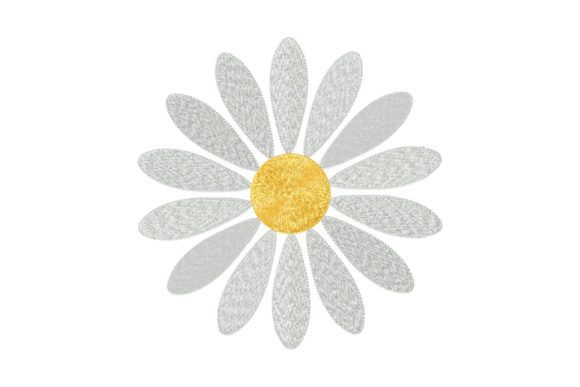
Reviewing the Simple Single White Daisy for Real Projects
As a designer who has spent countless hours hooped up at the machine, I have learned that not all floral motifs are created equal. Some are overly complex, requiring dense stitch counts that pucker delicate fabrics, while others are so minimal they lack visual impact from a distance. When I first loaded the Simple Single White Daisy into my editing software, I was looking for that sweet spot: a design that is clean, versatile, and emotionally resonant without being technically demanding. This piece falls squarely into the Single Flowers category, offering a modest yet striking aesthetic that speaks to femininity and family bonds.
First Impressions and Visual Mood
The immediate appeal of this design lies in its restraint. In a market saturated with hyper-realistic, multi-layered botanical illustrations, a simple white daisy stands out through clarity. The layout is balanced, with petals that radiate naturally from the center, creating a sense of openness and light. It does not try to be everything to everyone; instead, it commits to a specific mood of gentle charm. For embroidery designers, this simplicity is a feature, not a bug. It means the design can scale reasonably well without losing its identity, provided you respect the limits of your needle and thread.
When evaluating any machine embroidery design, I always ask: what story does it tell? This daisy whispers rather than shouts. It suggests nostalgia, purity, and a touch of vintage warmth. This makes it an ideal candidate for projects where the emotional connection is as important as the visual decoration. Whether you are creating a personalized gift for a new mother or adding a subtle branding element to a boutique clothing line, the design’s understated elegance works in your favor.
Real-World Application: The Tote Bag Test
To truly understand how a design performs, you must move beyond the screen and into the hoop. I recently used this daisy for a custom order involving canvas tote bags. The client wanted a minimalist look that would appeal to eco-conscious shoppers. I chose a natural, unbleached cotton canvas for the base. Here, the white thread of the daisy did not pop with high contrast, but rather blended softly, creating a tonal, textured effect that felt sophisticated and organic.
If I had chosen a dark navy bag, the result would have been drastically different. On dark fabric, white thread shines brightly, making the embroidery project a focal point. However, on light or neutral backgrounds, the design relies on the sheen of the thread and the texture of the stitches to define its shape. This is a crucial consideration for Etsy sellers and small shop product creators. You must decide if you want the design to stand out boldly or to serve as a subtle textural accent. For apparel like a cream-colored linen shirt, the latter approach creates a high-end, bespoke feel that customers often associate with higher value.
Performance on Different Fabrics
Versatility is key for any digital embroidery file intended for commercial use. I tested this daisy on several materials. On stable woven fabrics like cotton twill and denim, it stitched out cleanly with minimal pull. The stitch density appeared moderate, which is beneficial for maintaining the hand-feel of the garment. However, when I moved to stretchy knits for a sweatshirt embroidery test, the results required more attention. Without a proper cut-away stabilizer, the lightweight nature of the design could lead to slight distortion over time, especially if the garment is washed frequently.
For baby embroidery items, such as onesies or burp cloths, the softness of the backside is critical. Since this is a single flower and not a dense block of color, the backing is generally manageable. Still, I recommend using a soft, tear-away stabilizer for woven baby clothes to ensure comfort against sensitive skin. For embroidered patch creation, this design works beautifully because its clear outlines allow for easy satin stitching around the edges if you choose to add a border.
Technical Considerations for Designers
While the Simple Single White Daisy is user-friendly, it is not without its technical nuances. Because the design relies on white thread, any shadowing from underlying fabric colors or poor tension can become visible. I strongly advise running a test stitch on scrap fabric of the same weight and weave as your final product. Check your thread colors carefully; a bright white may look stark against off-white linen, whereas a cream or ivory thread might blend more harmoniously.
Pay close attention to the hoop size you select. While this is a small motif, placing it too close to the edge of a large hoop can cause registration issues if you are combining it with text or other elements. If you are using this as part of a larger composition, ensure there is adequate breathing room. The design’s simplicity means it does not hide mistakes well. A skipped stitch or loose tension in the center of the flower will be immediately noticeable. Therefore, regular machine maintenance and proper threading are non-negotiable.
Commercial Viability and Branding
For craft business owners, consistency is vital. This daisy offers a consistent look that can become part of your brand signature. It works well for holiday embroidery, such as spring-themed collections or Easter gifts, but its lack of seasonal specificity allows it to remain relevant year-round. When creating printable mockup assets for your online store, remember that lighting plays a huge role in how white embroidery is perceived. Use side lighting in your photos to highlight the texture and dimension of the stitches, ensuring potential buyers can appreciate the quality of the finished product.
Before selling items made with this embroidery file, always verify the license terms. Most commercial embroidery designs allow for the sale of physical finished goods, but restrictions may apply to sharing the digital file itself. As a professional, protecting your intellectual property and respecting the creator’s rights is essential for long-term success in the commercial embroidery space.
Final Verdict
The Simple Single White Daisy is a reliable, charming addition to any designer’s library. It excels in contexts that value subtlety, tradition, and clean aesthetics. It is not a design that will overwhelm a garment, but rather one that enhances it with a touch of graceful detail. For those creating custom apparel, tote bag design concepts, or heartfelt gifts, this motif delivers both emotional resonance and technical ease. Just remember to respect the fabric, choose your stabilizer wisely, and let the simplicity of the flower speak for itself.